Mastering Memory Pictures
Suitable for children from 2 years to 11 years old. It includes images of animals, food, transport, sport and other items.
A teaching method that makes memory strategies visible, so they can be discussed, learned and used in real life.
This page is a record of the Mastering Memory method: how it works, the thinking behind it, the program built to support it, and what teachers, therapists and researchers found when they used it.
Mastering Memory will enable you to discuss with your pupils / students / clients or children how to improve their use of memory strategies in real life by discussing the strategies that people with a good memory use in real life.
Because it is not possible to see inside the head of someone else who has a good memory, people cannot learn memory strategies through observation. Mastering Memory provides a way to externalise the process and discuss attitudes, techniques and strategies that can help them firstly within the program and then in real life situations.
Mastering Memory is a teaching programme used with children and adults to help them to take control over the memory processes and strategies which they use, by using a metacognitive approach. Metacognition is often described as ‘thinking about thinking’ and Mastering Memory encourages thinking about memory as a part of thinking.
Consciously thinking about memory, and discussing aspects of memory with a teacher, allows the student to gain an understanding of their own memory and how they might use this knowledge to enhance their ability to learn in real life.
Whilst it is presented as a computer program, the essence of successfully using Mastering Memory is the discussion that takes place between the teacher / parent and user. This metacognitive discussion, and how to transfer and generalise to real life, is explained in the accompanying manual.
Neuroplasticity – the ability of neural networks in the brain to change through growth and reorganization – is possible. You CAN improve your Memory by specifically thinking about how you remember things, where your focus is when you are best at remembering and what strategies you can employ, especially if you talk about memory with other people and try out the strategies which they find work best for them.
If you are looking for a computer program which can, on its own, magically improve a child’s or user’s memory, Mastering Memory is not for you. If you want to help someone understand more about their memory and how it works, and so be better able to use their memory in real life, Mastering Memory is designed to help you do that.
No App or computer program can magically claim to improve memory in real life simply by playing it. If you do that it is just a game, which may be fun. Improvements in your memory come through the activities described above, especially if done in discussion with someone else. Parents, teachers and therapists can talk to people experiencing memory problems about HOW they are remembering things and, together, can work out and practise new memory strategies that can be used in real life. This process can be done without any software, but Mastering Memory is a great tool to allow you to do that.
Playing with this app without the help of a supportive human will not improve the memory of the user in real life. Because if you already knew what to do to improve your memory you would be doing it already! The problem is we don’t talk about memory and HOW we remember. So someone who is not good at memory has no way of learning from their peers or parents.
“A metacognitive approach where students are taught how memory works and how to develop alternative strategies has been proved to work with people with dyslexia.”
Each session moves through the same five steps. The program presents the sequence; the adult guides everything else.
Let the student try different levels, speeds and modalities, so they become aware of their current capability.
A sequence appears on the screen, or is heard, and then vanishes. The student recreates it in exactly the same order.
Talk about HOW they remembered: what was easy, what was hard and which strategy they used.
If they have no idea what strategies they use, show them out loud how you would remember the sequence.
Agree where to use the strategy in real life, and set a timetable to practise it.
Then begin again at the next session. Once a week for around 15 minutes is generally enough.
The discussion of the different option screens on Mastering Memory is what makes the person understand their own memory patterns. For example:
And after each sequence:
If a parent or carer or tutor can model how THEY remember sequences using Mastering Memory this will help the Brain Training of the person with a memory problem. After all how else will those experiencing problems learn what people with a good memory do silently and automatically inside their heads?
If the child has no idea what strategies they use, the adult mediating the program can demonstrate out loud and model how he or she would remember sequences of pictures. This is a good strategy for parents who want to help, but don’t feel confident to teach Memory Strategies.
The point of Mastering Memory Pro is to discuss HOW you remember (i.e. the strategies you use), discuss HOW to use those skills to improve memory in real life and set a timetable to provide motivation and opportunities to practise using those strategies.
There is a developmental sequence of memory strategies, but anyone who can remember can help someone find out what options may help them. It is important to then apply that knowledge in the real world, to remember things that matter.
Mastering Memory Pro and its pictures are a tool to discover your strengths and weaknesses, and understand your own Memory Blueprint through discussion.
The process of using Mastering Memory does NOT involve repetitive practice of exercises that are supervised by a computer. Mastering Memory is supervised by a teacher because one of the main objectives is to encourage self-awareness in the student, exploration of what works and what does not, the guided learning of memory strategies, reflection on progress and goal-setting in real life. A computer is not (yet) able to provide this degree of personalised feedback.
During the session the student will attempt a few exercises, trying out memory strategies which may be thought up by him or her, but which may be suggested by the teacher who has the use of the Mastering Memory Manual for guidance. The process of using Mastering Memory is based on a range of theories, one of which is a metacognitive approach (see Chapter 5 of the Manual). Students should be allowed to try Mastering Memory at different levels of difficulty in order to become aware of their current capability. Mastering Memory does not have a pre-determined set of exercises in which the student must complete one level before he or she can proceed to the next. Allowing students to explore all levels and parameters of Mastering Memory allows them to become self-aware and often generates motivation to improve.
The parameters within Mastering Memory can be varied in many ways to make the exercises more or less difficult or to concentrate on auditory or visual input or both together. The content of the material itself also lies on a spectrum that ranges between ‘easy’ and ‘difficult’. The hardest level, at one second intervals on auditory input, is a stretching task for most adults and needs them to think about how to do it successfully. Obviously the same sequence can be seen as many times as required, like learning for exams in real life.
Students learn that memory is not a fixed attribute that is either ‘good’ or ‘bad’ for different people but has many subtle aspects to it. They can influence their ability to remember something by using what they have learned about memory, in particular their own memory, and by adopting an orderly, methodical approach based on what they know and their assessment of the difficulty of the material.
Mastering Memory should be used by a student under the supervision of a teacher, and not on his or her own. This is because we believe that a computer can’t monitor and check a student’s understanding, carry out a review of the session, generalise the concepts, help the student to transfer them into real life and generally personalise the session to the student as well as can be done by a teacher. The Teacher’s Manual provides suggestions and information, though the teacher should also adopt an enquiring approach to what works or does not work for the student and bring their own practical knowledge and experience to the session.
We recommend that after a number of sessions of Mastering Memory, possibly covering a period of one term, the student stops the sessions but is encouraged to continue developing their self-awareness of what works and does not work for them and to try different strategies for coping with real life memory and learning tasks. The use of memory strategies is developmental, and it may be appropriate to engage in a further set of sessions using Mastering Memory in the following year.
“One of the most common misconceptions about Mastering Memory is that it needs to be used on a daily basis. This is simply not the case – once a week for around 15 minutes is generally enough. When the student is working with someone else (such as a teacher, classroom assistant, family member or friend) the objective is for the student to grasp and understand one more strategy, or to practice a new strategy that is being introduced, and to think how they can apply it in ‘real’ life. The objective is not, through daily drill, to produce a student who can perform well on this particular program without incremental benefit in the outside world.
This is why it is so important for someone to sit alongside the student when he or she uses Mastering Memory. When someone else is present and available, the student’s approach to the problems thrown up by the program can be discussed and new memory strategies presented, with help from the manual, and incorporated into the student’s repertoire as appropriate.
Quite a number of people have reported that using Mastering Memory with a small group of up to five students who discuss the problems together also works well.
However, a student working on his or her own, without someone to discuss their memory strategies with, is, in my view, unlikely to obtain substantial benefit from Mastering Memory. Someone who has already recognised a need to expand their toolkit of memory strategies is, self-evidently, unlikely to spot the most useful strategy without assistance or he or she would be using it already. This is why Mastering Memory is not sold as a network version that could be used by many students at the same time with limited input from a teacher (although it can be made to run over a network if necessary).”
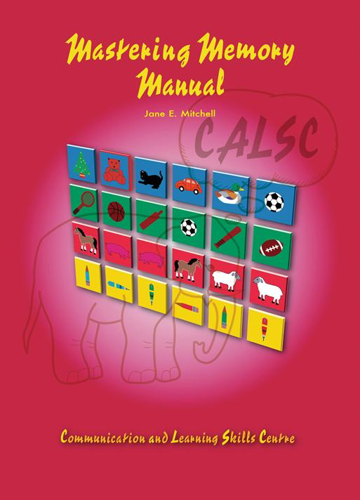
The Mastering Memory Teaching Manual shows the teacher how to mediate an improvement in memory strategies with their student, using the Mastering Memory software.
Mastering Memory is suitable for people with:
Melanie Myerscough is a special needs support teacher at Derbyshire County Council’s Support Service for SEN.
“I work across several schools with pupils who have a statement of special needs. They may have learning difficulties like autism, Down syndrome or ADHD. Memory is an underlying issue with all of them, whether it’s poor visual, auditory or sequencing memory. I needed something to help them develop better skills, which is where Mastering Memory comes in…
The software allows me to work in a methodical and standardised yet highly flexible way. It presents objects visually or orally at precise intervals with no clues such as intonation to give the game away. Children have to rely on their remembering strategies alone.”
Mastering Memory has also been used with those with working memory difficulties. Laura Bayntun-Coward’s review shows that whilst Mastering Memory does not claim to change the underlying neurology of the working memory, it can successfully be used to improve the student’s ability to function in real life.
In March 2012 she said:
“I have used your programme as part of a research topic to support a case study with working memory difficulties: it was most effective for enhancing her self-awareness (or Meta-awareness) of her visual strengths, of understanding that she could find patterns within information that seemed random to her before.
She has used the auditory mode to practice visualising [a sequence] in her mind and then be able to retrieve it effectively and she has also learned that she is more accurate if given more time (she worked at 5 second intervals) to retrieve information.
The programme has also boosted her self-confidence enormously because she is no longer ‘afraid’ of learning information, she has moved from level 2 in November 2011 to level 4 this month, as the records prove that she is ready for the challenge.
As a result her assessment scores in Maths, Science and English have improved dramatically as she is approaching her work confident that she can learn it in the way that suits her style of learning and with the knowledge that she needs extra time to do this.
I highly recommend this programme to colleagues and parents, but the caveat is that it must be supported by an adult who is familiar with the specifics in the manual and can transfer the memory skills to other situations required by the student.”
The Research and Feedback sections below give a historical look at the computer program that preceded the apps, and the studies done on its efficacy. It was recommended by Lucid CoPS as a treatment for poor auditory and visual short term working memory, and is still regularly recommended by Educational Psychologists when a child has a poor digit span score, often the pattern found in children with Dyslexia.
The author of the original program, a Speech and Language Therapist, has used it with adults with Memory Loss due to a variety of neurological reasons.
Neuroplasticity is possible, try for yourself and stay optimistic.
Mastering Memory is more than a Memory Game! It was the first Memory-focused Brain Training on computer used in schools by therapists and teachers back in 1995. Since then it has been used to help 1000s of children, adults and the elderly to understand their strengths and weaknesses in short term and working memory and master metacognitive memory strategies to help peak performance in real life.
Mastering Memory is a tool you can use to help improve the understanding and strategies of both Short-Term Memory and Transfer to Long-Term Memory. Both auditory and visual sequential memory are addressed and both are needed for many learning skills.
Mastering Memory is a simple but innovative programme and is suitable for use when a person has poor short-term or working memory. The program is presented in a highly accessible, informative and entertaining format.
The Mastering Memory Software is a tool which requires the skills of a teacher, learning support assistant, therapist or parent to work with a child or student to:
Suitable for children from 2 years to 11 years old. It includes images of animals, food, transport, sport and other items.
Suitable for secondary age students and adults (Pictures module is also included).
Mastering Memory Pro is great for schools and therapists to use as a tool to help them improve the short-term memory of their pupils and clients. It has modules suitable for children and adults. At its easiest it can be used with pre-school aged children (with a prerequisite for understanding the concept of same and different) and at its most difficult it is hard for most adults.
The hardest option is presenting 5 items, in auditory modality, at 1 second intervals, with 3 information carrying words per item; e.g. the colour, the direction and object name. That is 15 bits of information to recall and hold in either working memory or short-term memory or transfer to long-term memory as directed by the teacher.
On screen, a sequence of pictures is presented to be remembered. In the Pictures version, these consist of images of animals, food, transport, sport and other items. The objects are presented visually and/or auditorially to improve visual and/or auditory memory. The sequence, speed and number of pictures selected can be adjusted to suit the aptitude of each individual. There is a carefully graded sequence in which the amount of detail increases at each level to develop observation and memory skills.
Here are examples of two levels from Mastering Memory Pictures.


At level 1 the icons are simple stand-alone pictures which are easier to remember than the more complex pictures in level 3.
Notice that level 3 requires two pieces of information to be remembered to accurately remember the pictures – the name of the picture (boot, bucket or ball) and its colour (black or blue).
Each module has 16 alternative sets of pictures with six pictures in each set. These can be used to generate over 50,000 different sequences which can be selected by the teacher / therapist / parent or randomly generated by the computer.
The program offers three presentation modalities: visual, auditory and visual and auditory combined. This allows the teacher and pupil to assess strengths and weaknesses and encourages metacognitive discussion about the consequences of them in real life.
“Mastering Memory is a valuable instrument for detecting modality strengths as well as for improving memory.”
Level 4 of the Pictures module can be difficult for most adults – and stretches the use of memory strategies.
Here is one example of some of the pictures at Level 4 of the pictures module.




Colours, Shapes, Numbers and Letters is a useful module containing 132 different symbolic images. Some students find this is a good link between the more concrete picture modules and real life memory for spellings, for example. These examples illustrate some of the selections available.



Text presentation showing “written words” describing the pictures. This is a good link to improving reading for memory – once memory strategies have been learned.

Here are other examples from the modules in the Pro version.
The Pro version includes the Pictures module from Mastering Memory Pictures.
The additional modules in the complete version are:
The Signs and Symbols module consists of 16 sets of topics which contain a total of 132 different images. Some examples are shown below. This follows the same difficulty levels as the ‘Pictures’ module (so it can be very easy ranging up to very difficult) but with images that are appropriate for older users. There are no childish white rabbits or bears! Boys around 11 or 12 prefer this module.



The Photo module is useful for Secondary aged students and adults or for children who prefer a photo to a picture. The examples illustrate some of the selections available.



Abbreviations is a more abstract module. They are a good extension exercise for high level users who want to link their memory improvement to study skills techniques; for example, learning chemistry formulae or equations.


Mastering Memory Pro is a tool in which you can alter the:
Thus you have 1000s of possible sequences to choose and see which are easier and which are more difficult.
Mastering Memory is not designed to be “flashy” or like a normal computer “game”. It very simply “does what it says on the box”, as one teacher put it. The software is easy to use and will not tax people who are not keen on using computers. Children feel at ease with the system and its application immediately.
Mastering Memory makes presenting sequential memory tasks easy for the teacher / therapist / parent. It puts an end to sorting cards, remembering yourself what you told the child, or timing the presentations.
A detailed achievement record is kept for each User. This can be printed out and analysed or used as a record to show progress.
The article Metacognition Not Repetition explains that although the computer program may appear simple to operate it is the metacognitive approach, in which the teacher works with the student, that brings about the improvements. The approach is explained in the accompanying Mastering Memory Manual.

We have always been pleased to receive feedback on Mastering Memory. A number of comments and reviews are included below so that you can see how other people have used the program and what they thought of it.
“Mastering Memory is a computer program which is much more than a game. It is a flexible, structured teaching tool used to improve visual and auditory short-term memory.
Sequences of pictures and/or words are presented for a set period of time and then the student has to recreate the same arrangement. There are four levels of difficulty with a variety of pictures. The sequence of pictures, the number of objects, speed of presentation and complexity of the sequence can be altered to suit the individual.
Students are encouraged to improve observation skills and consider their learning mode and strategies for transferring information into long-term memory. Support is needed while the program is being used as the teacher needs to discuss these strategies with the student.
I have used Mastering Memory with students of all ages (including adults). The program is easy to use and is FUN. The use of a metacognitive approach where students are taught how memory works and how to develop alternative strategies has been proved to work with people with dyslexia: I have found Mastering Memory has improved input to short-term memory and transfer to long-term memory. It is to be highly recommended.”
“Underlying weaknesses of memory are a contributory factor in more cases of learning difficulty than many of us realise, so a program for training visual and auditory memory could be an exciting addition to the bag of tools deployed by professionals or parents working with those with learning difficulties. Many children with memory problems believe that there is nothing they can do to improve their performance – a view frequently confirmed by off-the-cuff remarks made by adults. Mastering Memory proves otherwise.”
“I have been meaning to let you know how brilliant ‘Mastering Memory’ is. I am using it with children in an Infant Speech and Language Unit who are thoroughly enjoying the challenge. The boy for whom I purchased it, is doing particularly well and this has had the hoped-for knock-on effect on his reading ability. The more we use it, the more we feel that it will prove to be a very useful addition to our other activities.
I often find that things that seem a good idea, are disappointing in practice. This is not so of Mastering Memory. I really think that you have done very well to produce something that both adults and children enjoy doing. We are finding that the children are sometimes better than we are at some activities and it has made us all think more carefully about the strategies that we are using when we need to remember!”
“This man had received tuition from a previous tutor for 29 years but could neither read nor write. I used the structured approach of the Dyslexia Institute’s Literacy program as the skeleton on which to base my lessons. It became only too apparent that ‘Luke’ was unable to retain information in working memory, for even the shortest period of time. He put the utmost effort into attempting to fulfil whatever was asked of him, he was not easily distracted and remained on task, even when there was no hope of any recall.
Despite my best endeavours, (and advice from professionals), progress was not only slow but very patchy. Gradually more letters were added to his knowledge base, but quite often they became interchangeable, especially the vowels. Luke could read two letter words accurately, three letter words well (until the third vowel was introduced), and on a good day the occasional longer word. Handwriting was progressing, but spelling was variable in accuracy. I had tried a whole range of memory games, both verbal and visual, but was becoming dangerously close to exasperation with the impermanence of working memory improvement.
Then in 1998 I came across Mastering Memory. Having briefed Luke on the Level 1 module and discussed the desired outcomes, I introduced the program. After the first input, to say he was enthusiastic would be an understatement… he regards the program as a challenge and would use it each lesson. He is keen to move on to the next difficulty level, far faster than I can introduce other aspects of metacognitive training. Despite our slight differences in learning requirements, over a period of almost two years ‘correct-ish’ usage Luke has shown improvements in the ability to retain information across quite a wide sphere of activities, but in the area of literacy skills he is often able to break multi-syllabic words into component parts, is progressing with compound words, spelling has improved, and he seems able to apply methodologies more consistently. He still has a long way to go, but ‘Mastering Memory’ will assist in this progress.”
“A simple, innovative and memorable new approach to training the imaging and retentive capabilities of the human brain.”
“At 19, John had two serious car accidents within three months which resulted in amnesia, shock, and some internal bleeding. He told me that his family and friends had consequently acted as his memory and that, for about 6–7 years, he never really had to think for himself. It was after he failed repeatedly to complete a simple shopping task that his wife forced him into recognising that something was wrong. Just before he started his course in October … John contracted a serious ear infection which, despite hospital treatment, has persisted, resulting in additional concentration problems. Because of this and other personal problems, John and his sub-dean decided that he should re-start his course in October [the following year].
John and I conducted the evaluation over 10 sessions [between February and April]. The length of the assessment was necessary because of John’s hearing and personal difficulties, as well as my own degree finals.
During his initial session, John was very dependent on me prompting him to go ahead. He showed a lack of confidence in his own memory, which was compounded by his hearing problems. As we were both ‘guinea pigs’, John and I initially went through the buttons and the program together. We started the exercises at level 1, and worked up to level 3, at 3 seconds [per picture]. John found the lower levels easy, but had a tendency to transpose letters and figures. He had basic strategies for memorising, such as recognising that sae/tba/fao meant something to him, but he found it difficult to remember more subtle differences, eg, different shades of the same colour, and the same shape facing in a different direction. He found letter combinations much easier than number or picture combinations.
John found the software very useful. He liked the way that the combinations prompted him to think for himself. Over the ten sessions, we covered different levels, including level 4, letter combinations. John was reasonably confident at this level, despite the degree of difficulty. However, he admitted that he focussed on one picture at a time, rather than grouping or chunking. I used the different images to suggest ways to make recalling combinations easier. I started by advising him to pair numbers, rather than see them individually, also to recognise quickly and then learn to ignore superfluous information, such as repeated images or words. He would then have more time to remember the differences.
I used Speedreader, a screen reading package, after these sessions, to assess John’s memory recall. From an initial speed of 140wpm, with 67% accuracy, he improved to a maximum of 279wpm with 100% accuracy. His last session, in which his hearing was quite impaired, saw a speed of 254 wpm with 81% accuracy.”
The following feedback was given on working with small groups of children.
“I was asked to trial the program by Durham’s Special Needs department. All the children we use this program with have memory difficulties, expressive, or receptive or both as well as other speech and language difficulties and they were all of junior age. Memory work forms part of core work done with these children.
I found the manual for the ‘Mastering Memory’ program useful. It described working memory in a simplified form and gave insight into how to help children work out ‘how’ they were remembering things, what was hard and how to try to make it easier.
Initially my support assistant and I worked with individual children as set out in the manual. We found it difficult to timetable quiet sessions with limited distractions.
Mrs Boukadida, my support assistant decided to try the program as an extension to group memory work. The children all enjoy the program and say it is interesting, the pictures are clear and the speech instructions are easy to understand. They all say they can remember things easier now. The children all showed an improvement, some managing 5/5 on level 2, and experience a sense of achievement when another picture is added to the list.
We always work as a group of 3–6 children. All the children have to watch each turn and say ‘right’ or ‘wrong’ and if wrong why. This encourages the children to concentrate and listen to everybody, not just when it is their turn.
It is very useful to be able to choose to work with visual, auditory or both together, this has sometimes shown us a pattern in individual children and they can also say which they find easier and why. By working in a group the children have realised that others also have similar difficulties and they now talk together, and share strategies, giving each other help and advice. No-one has become upset when they make a mistake as they see others also making mistakes and they all discuss together how to improve their abilities.
This sharing of experiences and ideas with judicious adult input has been invaluable in our work with these children. They enjoy it, we enjoy it and we can all see their progress.”
The following comment was received after a small study was carried out to assess whether Mastering Memory can be used to facilitate improvement in short-term visual memory skills.
The results “do suggest that short-term visual memory can be improved with intervention and Mastering Memory appears to be a useful tool for improving short-term memory.”
Since its launch in 1996 several independent studies have been carried out on the program. Copies of these are available if you are interested.
Two were by students at Hull University supervised by Prof. Chris Singleton. Both concluded that computer assisted memory training was a useful method for improving memory.
A further study was carried out by Wendy Sullivan at Fairley House School for dyslexic students. She concluded that “Mastering Memory was effective in improving visual sequential short-term memory”. A student working under Prof. Sue Buckley at Portsmouth tested whether Mastering Memory would improve the memory of children with Down’s Syndrome; it did, at statistically significant levels, after only a short course of sessions. Glenys Heap at the Dyslexia Institute reported in the Dyslexia Institute Journal that she has found the program improves both short-term and long-term memory.
51 children aged between 7 and 9 took a memory test before and after training. 24 of them had six 20-minute sessions with Mastering Memory over three weeks, half seeing the pictures only and half seeing and hearing them; 27 had no training. Both trained groups improved significantly more than the untrained group, and the two kinds of training did not differ significantly from each other.
We are grateful to Dr. Singleton who kindly provided a copy of this unpublished research of which the Executive Summary is provided here.
A number of previous studies have demonstrated that memory can be improved by training. Past research has considered the effectiveness of training using a computer based approach, primarily in adults, but also in children. This present project focuses on the benefits of training on children’s short-term memory, and how this might have implications for education.
There are two main aims involved in the study.
These objectives stem from prior research considering the use of computer training programs, and how they might be of value both at school and within the home. Computers provide a cost-effective and accurate means of training and assessment that can be used, if necessary, without professional supervision. It is these advantages which have led psychologists to examine how they might be able to utilise this advancing technology. Mastering Memory (Mitchell, 1996) is one of a number of computer memory programs that have been formulated in recent years. It provides a comprehensive, detailed training package to aid the recall of sequences, and can be applied to a variety of age ranges.
The second aim considers two different forms of training to establish the most productive. This theory stems from research into the different types of memory and how the information we are given might be processed differently within the brain. A large amount of research indicates that verbal or spoken stimuli are processed in a different way to visual or perceived stimuli. The most influential research carried out in this area was by Baddeley and Hitch (1974) who proposed the Working Memory model. The main hypothesis of this model is that there are two different systems for processing the verbal and visual information we receive. A large amount of research has supported this view, and indicated that the presentation of information can play a key role in determining what is remembered. It might therefore be assumed that the form of training given, whether it be verbal or visual, should be specifically aimed at the memory deficit being displayed. Yet research has suggested that a combination of visual and verbal training (multi-sensory) is the most productive form of training. The present research aims to review this conclusion and determine whether in fact a multi-sensory approach is the most beneficial.
The study involved 51 children (19 females and 32 males) aged between 7 years and 2 months and 9 years and 6 months. These participants were initially divided into 2 conditions, experimental and control, in accordance with their results on a memory test (pre-test). The control condition (27 participants) acted as a comparison group, and received no training (Group 1). The experimental group (24 participants) were divided into half again, 12 participants received purely visual training (Group 2), and the other 12 participants received a combination of visual and verbal training (Group 3), both using Mastering Memory.
The trained participants were placed in pairs and each received exactly the same schedule of training, the only difference being that Group 2 received the information visually on the screen and Group 3 received the information both on the screen and spoken by the computer. After 6 sessions of training, lasting about 20 minutes a session over a period of 3 weeks, a second memory test was administered. This second test (post-test), as with the first, was carried out by all 51 participants. The post-test was a means of assessing whether any memory improvement had occurred, and if so which condition displayed the greatest improvement.
Results from the pre- and post-tests were collected and analysed using statistical tests. The findings indicated that there was significantly greater improvement in those who received training (experimental conditions), compared to those participants who did not receive any training (control conditions). This confirms the belief that computer training, specifically Mastering Memory, can improve recall.
Analysis of the results for the two trained conditions demonstrated no significant difference between the improvement shown for the two different forms of training. This contradicts the view that a multi-sensory training approach is the most beneficial, and fails to support the past studies in this field which report that a combined approach is the most productive. A number of methodological problems, occurring due to time and sample constraints, may account for these surprising results. A major limitation with the study was the difference in ages between the three conditions. The average age of participants in the visual/verbal training group was considerably lower than the average age of participants in the other two conditions. This could explain why Group 3 did not perform significantly better than Group 2, as expected. A number of limitations, including the sample used and educational background of participants in the Groups could also be cited. Further research into this area might examine the use of purely verbal training, or discuss the relative benefits of memory improvement with regard to enhancing reading ability.
In conclusion, the results confirmed the view that memory training using Mastering Memory is an effective and efficient means of improving recall. Contrary to expectations, the findings did not demonstrate significantly greater improvement for those participants receiving multi-sensory training, compared to those receiving purely visual training. Consequently, computers have been shown to provide a valid means of training that can be used within education to enhance children’s recall. Further research is needed to examine, in detail, the benefits of the varying types of training, in order to determine the most productive form.
56 children aged 9 to 11 had four sessions with Mastering Memory, either with the experimenter suggesting memory strategies or on their own; a third group had no training. Both trained groups scored significantly higher than the untrained group on 3 of the 7 memory tests. The group given strategy suggestions showed the larger gains, though the difference between the two trained groups was not statistically significant.
We are grateful to Dr. Singleton who kindly provided a copy of this unpublished research of which the Abstract and Discussion are provided here.
The study investigated the possible effects of computer-aided memory training. The experiment involved 56 children from two age groups: 9:00 – 10:00 and 10:01 – 11:05.
For memory training the Mastering Memory Program (Mitchell, 1996) was used in two conditions:
Short-term memory was assessed by means of 7 of the British Ability Scales – II tests:
(Elliott, Smith & McCulloch, 1996)
The same tests were administered twice: before and after training to the experimental groups, and at approximately the same times to the control group.
The outcomes of the statistical analysis of the results of the tests indicated that both groups which had the memory training obtained significantly higher scores on 3 of the BAS-II tests than the control group.
There were no significant differences between the two experimental groups, although, the descriptive statistics suggested greater benefit for the group which used the Mastering Memory Program together with instructions from the experimenter regarding mnemonic techniques.
The purpose of this project was to examine the effects (if any) of the computer-aided memory training in children. The main findings indicated that for some of the memory tests taken after the training there were significant differences between the 3 groups of children.
The test which has showed consistently significant differences among all 3 groups was the BAS-II ‘Recall of digits Backwards’ test. There was, however, a 3-way interaction (for group, sex and age) found for this test (F=6.8 df=(s,55), p < 0.05). Nonetheless, the significance level (p<0.01) of the main effects found and the nature of the data justify the acceptance rather than rejection of those effects (Howell, 1989). The means for the groups on this test suggest that the ‘instructions’ group had the comparatively highest mean scores (66.5), followed by the ‘no instructions’ group (55.7), and the control group with the smallest mean (of 35.5). The simple interpretation of such results could be that it was the training which was the cause of such differences, where the Mastering Memory Program used as a tool rather than on its own had the biggest effects. This, however, must be treated with caution in the context of: the nature of the ‘Digits Backwards’ test, the nature of the program used for the training, and the results obtained from other BAS-II memory tests.
Beech & Singleton (1997) claimed that even though the digits span tests (both backwards and forward) are not without their problems, they are considered by many practitioners to be the best indicators of short term memory (STM). The ‘Digits Backwards’ test involves immediate recall of verbally presented digits in the reverse order, a process which puts heavy demand on working memory, which holds the digits while one ‘turns them round’ in order to present them (verbally) in a backward fashion. Such a process can be regarded as a complex one, which perhaps requires a skill or learning of the best method (e.g. realisation that to achieve the aim one has to first store the digits in STM and only then attempt to ‘read them out’ backwards). It involves metamemory to a much greater extent than the other tests.
The nature of the Mastering Memory program is such that it presents pictures or names of objects and then demands immediate recall in the way of choosing the items from available options. It is of great importance to note that the ‘instructions’ group did not use the ‘only vocal’ modality at all (they did use it together with the visual presentations), and the ‘no instructions’ group used the ‘only vocal’ modality very occasionally, by very few children (unfortunately, there are no data regarding frequencies). Thus the Mastering Memory program involved primarily visual and visual/auditory memories, whereas, the digit span tests involved exclusively auditory memory.
Another important issue in interpreting the results obtained for the ‘Digits Backwards’ test is the results obtained for other BAS-II tests, especially, the ‘Digits Forward’ test for which no significant effects were found. The main difference between those two tests is the further processing of information in the ‘Digits Backwards’ test. As suggested earlier such processing requires certain skills, therefore, it may be more susceptible to practice effects. As such the effect could have been due to the practice of memorisation processes experienced by the children from the experimental groups. However, it is very unclear how this could have happened considering that: the other BAS tests did not involve working memory to the same extent (i.e. did not demand information to be held in temporary store while other processing was carried out); and that the Mastering Memory program had been used essentially in its visual modality while the digits tests require auditory memory.
The argument for a suggested interpretation (that it was the memory training which contributed to the reported effects) can be based on the dual-coding theory, which suggests that pictorial stimuli generate simultaneous verbal and non-verbal memory codes (Paivio, 1986). In which case the Mastering Memory program would involve the auditory memory regardless of its visual modality. Although, admittedly the role of the articulatory process in working memory is far from being clarified (Massaro, 1995).
The above argument can be also supported by the fact that both Mastering Memory program and the digits tests involve sequential memory. Singleton, Thomas and Leedale (1996) proposed that STM deficits in dyslexic children do not involve general STM but memory which involves verbal coding and/or rapid sequential processing. If those types of STM are the ones that seem to underlie the cognitive processes, perhaps they are also the ones which can be enhanced more easily (which would explain why there were very few significant effects found on other BAS-II tests). If it is accepted that this finding was a result of the memory training, the differences in modality (of the training tool and test) may indicate the transferability of the learned skills, which would be a very important factor in the light of evidence suggesting that transfer of skills is very difficult. Also the fact that there were significant results on the test which involves working memory more than the other tests has a bearing on those theories regarding working memory which claim that STM and working memory are distinct (e.g. Siegel & Ryan, 1989), and/or those which view working memory as a temporary storage of information while other cognitive tasks are being performed (e.g. Baddeley & Hitch, 1974).
The other test for which significant differences were found was the ‘Recall of Objects Spatial Immediate’ test, where the ‘instructions’ group obtained significantly higher scores (mean=80.6) than the ‘no instructions’ group (mean=75.35), which in turn obtained higher scores than the control group (mean 57.26). The ‘Recall of Objects Spatial Immediate’ test requires the types of memory which are very closely related to those that the Mastering Memory program involves i.e. visual and sequential (or spatial). This perhaps allows us to suggest that the differences found were the effects of memory training. Such a claim can be further strengthened by evidence brought by Kail & Hagen (1977) that despite iconic memory being invariant developmentally there are age-related differences in the way children and adults maintain and transfer visual information. This evidence allows memory training to facilitate the acceleration of the developmental processes.
Another test where there were significant effects found between the ‘instructions’ and the control group was the ‘Recall of Objects Verbal Immediate’ test. (The first group had a mean of 80.6, the latter 57.76). In terms of the modality of the test it involved presentation and then verbal recall. (The Mastering Memory program involved visual presentation and visual recall.) However, here again, one can claim on the basis of the dual-coding theory that both the test and the Mastering Memory program engaged both types of memory simultaneously. Which perhaps makes it possible to attribute the differences found to the effects of the training. The fact that there was no significant main effect on this test for the ‘no instructions’ group may indicate the importance of the role of a teacher/therapist in providing memorisation strategies.
Due to the fact that significant effects regarding age groups and both sexes were reported for just 2 different tests it is difficult to suggest that any of those two variables played any significant role in the experiment.
On the whole, the following facts which must be considered in the interpretation of the results:
Regarding the statistical analysis:
More generally, the hypothesis that there will be significant effects of the memory training between the groups were confirmed only for 3, and rejected for 4 BAS-II tests. In those 3 tests, however, it was also confirmed that it was the group which had used the Mastering Memory program together with the instructions from the teacher / experimenter that exhibited greater enhancement of memorisation process than the group which used the Mastering Memory program on their own. Although, the ‘no instruction’ group did exhibit some significant improvement too. This suggests that even though using the Mastering Memory program with an active role of the teacher is most effective, the Mastering Memory program used on its own may have some memory enhancing effects. This is contrary to the claims in the Mastering Memory manual, which say that without the teacher / therapist no effects can be gained. One of the intriguing questions which arise from this finding is whether the ‘no instructions’ group would benefit equally to the ‘instructions’ group if the computer program rather than the teacher / therapist / experimenter suggested using different memory strategies. This seems to be a likely hypothesis considering that the role of the teacher / therapist advocated by the Mastering Memory manual is that of prompting and suggesting, and giving the child a chance of discovering ‘how’ on his / her own.
In the context of evidence from studies on the effectiveness of mnemonic techniques, presented earlier, (which is inconclusive), in regards to certain memory tasks, the fact that the improvement in memorisation processes was not found on all of the administered tests is not surprising. But the fact that there were significant effects found on some of the tests is greatly encouraging. The evidence on mnemonic techniques suggests that they are fairly difficult to use and are even less likely to be adopted by children with ‘below average’ cognitive abilities (Kail & Hagen, 1977). The present study did not include any subjects with particular cognitive deficits and the groups were matched according to their abilities. Yet, it would be extremely useful if further investigations were able to show that children with ‘below average’ abilities could benefit from the computer-assisted or even fully computerised memory training to the same (or perhaps even greater) extent as ‘normal subjects’. This would be especially important considering that memory underlies many other cognitive functions, which are crucial in children’s educational careers. Moreover, the finding that even the group which used the computer on its own without any mnemonic instructions had exhibited some memory enhancement, suggests that fully computerised training might be feasible. This would make it possible to include memory enhancement on the curriculum in schools, without creating a burden on teaching resources. And also, as a consequence, would give the child more opportunities to practice.
The present study indicated also the importance of determining the type of memory being focused on. The research on dyslexia (Singleton et. al., 1996) clearly indicates that deficits of specific kinds of memory bear distinct consequences. Thus, it would be advisable to aim at the enhancement of a particular aspect of memory rather than ‘general’ memory skill, which as the results reported in this project indicate might be a difficult task.
Although this experiment has its imperfections, it has validated the attempts to devise a form of training which can facilitate short-term memory and take advantage of the capability of the computer. There is a need for further research which would clarify the long term effects of such a training, and identify the role of particular components of the training.
Given in the text above rather than the entire original piece of research.
Mastering Memory consists of an App and detailed teaching manual. It is a structured teaching tool to improve visual and/or auditory short-term sequential memory. It was designed by Jane Mitchell, a Speech and Language Therapist and Dyslexia Teacher, as a one-to-one tool to help teachers and therapists to teach people, in a non-stressful situation, how their memory works and how to remember things.
The manual explains how to encourage people to transfer their skills to other situations. The manual is a crucial part of the teaching programme, the computer is a tool to motivate the user, keep records, and make the presentation of the items easier. The manual explains how to use the program to improve memory skills. Chapter 5 explains the strategies of memory that someone who is good at remembering uses automatically, and how to teach these to someone who does not use them. Chapters 3 and 6 explain how to teach memory skills so that they do transfer and generalise to other areas.
Obviously the aim of the program is not just to remember sequences of pictures, but to learn the strategies of memory which can be useful to all learning and everyday life.
Mastering Memory is useful for people with:
and anyone with short-term memory problems.
People who want to improve their speed of recall or automatic long-term memory (which is a separate process from short-term memory) should consider Timely Reminders (KS4 and Adult) or Time to Revise (KS1 to KS3).
Mastering Memory can be used with both children and adults. The only pre-requisite is an understanding of the concept of “same and different”. It is available in two versions: the Pictures version is suitable for children from 3–11 years of age, and the Pro Version has modules suitable for secondary age students and adults. All modules provide the same range of difficulty but allow for the preferences of the user to be catered for appropriately. The wide range of modules and options provided by the program will almost always allow the mediator to operate the program at a level appropriate to the student/child’s needs.
The Pictures Version includes
Some of these contain images of teddy bears and rabbits which although appropriate for young children, are thought to be childish and therefore demotivating by older students.
For this reason, there are further modules that are age appropriate for older students (aged 11 years and older) and adults.
These extra modules are available in the “Pro” version of the program.
After having chosen the module you require the program asks you to enter the name of the user. You can enter as many users as required and keep full records for each (which can also be printed out).
There are four levels of difficulty which follow the same pattern for each module.
You choose
This can be used informally for assessing learning styles and discussing which modality is easier for the user. Or it can be used to develop weaker areas, whether that is visual or auditory memory.
A sequence will appear on the screen and then vanish.
The user needs to recreate the sequence seen or heard exactly in the same order.
Mastering Memory was designed by Jane E. Mitchell, who trained as a Speech and Language Therapist and dyslexia teacher (RSA diploma in Specific Learning Difficulties). Her wide experience includes work at Westminster Children’s hospital, a residential school for autistic children, and Fairley House School for dyslexic children. She has been a tutor for the RSA diploma and lectured for many years on memory, thinking and study skills at UCL and I CAN, where she was known for her useful practical approach.
Jane learned the techniques of Tony Buzan while still at school and has been trained in Feuerstein’s Instrumental Enrichment, Neurolinguistics by Dr. Willie Monteiro and Thinking Skills by Dr. Edward de Bono.
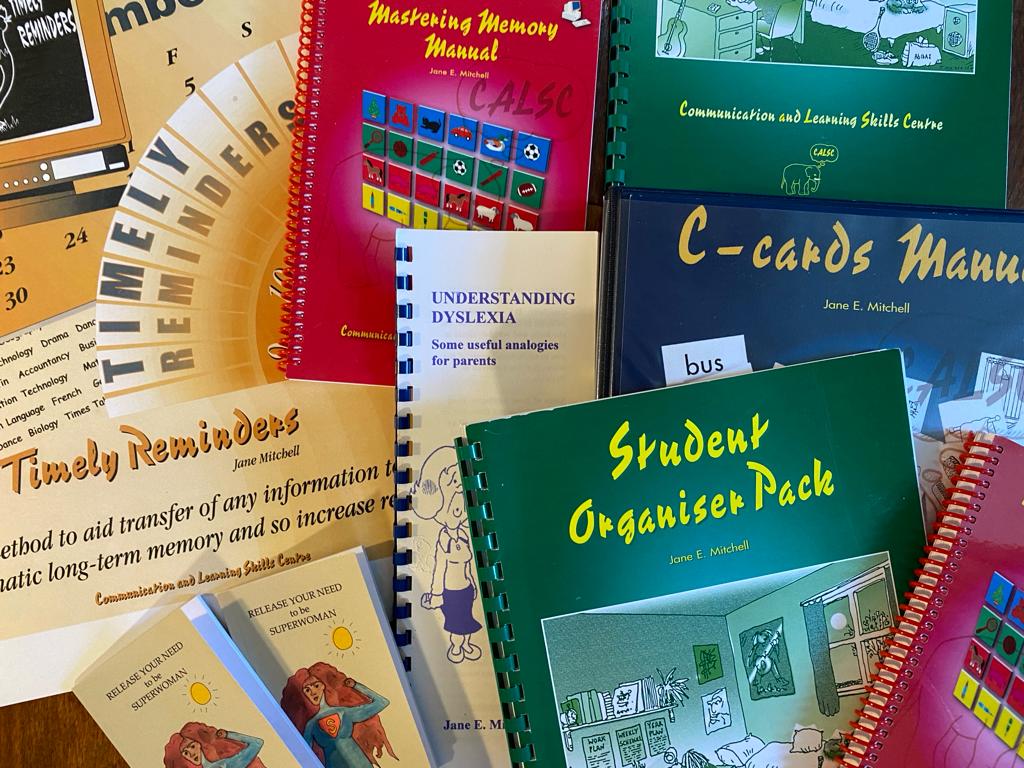
Jane has run the Communication and Learning Skills Centre (CALSC) since 1988 and provides the www.understandingdyslexia.co.uk website. Jane has previously provided the Student Organiser Pack, C-Cards Manual, Memory Bricks and the Timely Reminders computer program.
The concepts underlying Mastering Memory were originally developed by Jane Mitchell, an experienced speech and language therapist and dyslexia teacher for use with her students. Following requests from many sources Jane first made this available to parents and teachers in 1996.
The programme was developed as a computerised version of the therapy tool Memory Bricks, which dates back to 1984. It was nominated for a BETT Special Needs award in 2002, is recommended by the BDA Computer Committee, used by many people at Dyslexia Action and at numerous schools and Speech and Language units. It has been used successfully by teachers, learning support assistants, therapists and parents for many years. It is in use in many places around the world including Dubai, Australia, Hong Kong, Bangkok, Guernsey and New Zealand.